
Finding the best free web hosting plans for personal websites, portfolios, or side projects can feel overwhelming, especially when platforms quietly change their pricing, kill their free tiers, or bury their limits in fine print.
The good news: free web hosting in 2026 is real, reliable, and genuinely capable. Several major infrastructure companies, including Cloudflare, Netlify, Vercel, Google, Microsoft, and GitHub, among them, offer free hosting tiers that can handle personal projects, static websites, portfolio sites, and even early-stage web apps without you spending a cent.
This guide covers the 10 best free web hosting plans available today, with up-to-date feature details and an honest assessment of what each one is best for.
Quick note on Heroku: Heroku’s free tier was permanently discontinued in November 2022. It is not coming back. Heroku’s cheapest option today is the Eco dyno at $5/month. If you relied on Heroku for free hosting, see our recommendations for Render and Cloudflare Pages below. Both are strong free alternatives for different use cases.
1. Cloudflare Pages (Best Free Hosting Overall)
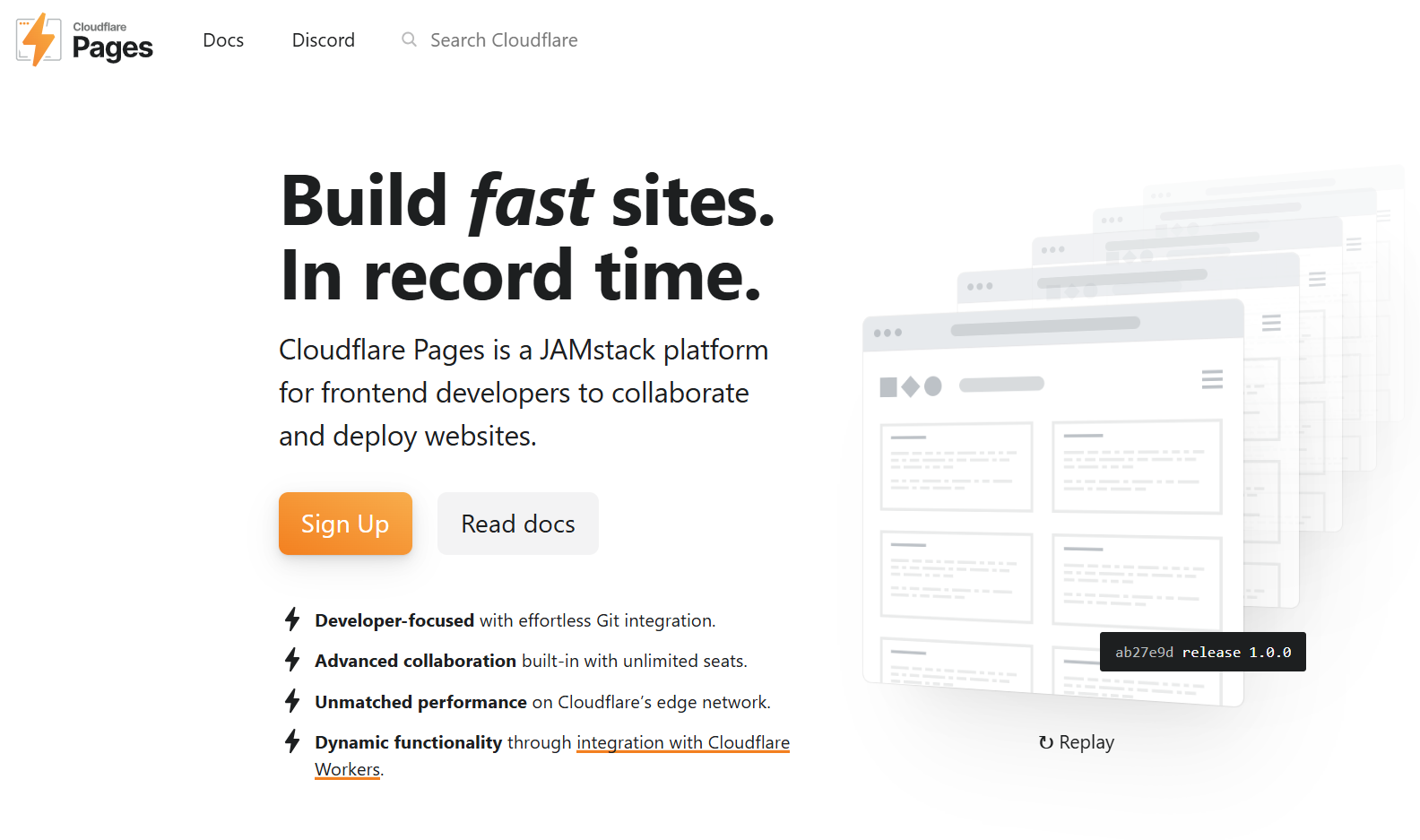
Cloudflare Pages is the standout free hosting platform in 2026, and the one most developers should try first. It combines genuinely unlimited bandwidth, a global CDN spanning 300+ cities, built-in DDoS protection, and free SSL, all on the free tier, with no credit card required.
Unlike Netlify and Vercel, which cap free bandwidth at 100 GB per month, Cloudflare Pages has no bandwidth limit at all. Your site will never go offline because a blog post went viral or a product launch sent a traffic spike your way. That alone makes it the most reliable free hosting option for any site that gets occasional bursts of real traffic.
Cloudflare’s network powers a significant portion of the internet’s infrastructure, so the free tier is backed by enterprise-grade infrastructure you’re simply riding along on.
Cloudflare Pages Free Tier Features:
- Unlimited bandwidth and sites on the free tier
- 500 builds per month, 1 concurrent build
- Git integration with GitHub and GitLab (auto-build on push)
- Pull request preview deployments
- Free SSL certificates and custom domain support
- DDoS protection and web analytics included
- Support for static site generators: Astro, Hugo, Gatsby, Jekyll, Next.js (static export), Nuxt, and more
- Workers Functions integration (100,000 requests/day on the free Workers tier)
- Serverless edge functions via Cloudflare Workers
Best for: Static sites, JAMstack projects, marketing sites, portfolios, and any project where reliability and traffic tolerance matter most.
Limitation to know: Cloudflare Pages has a 20,000-file limit per site and a 25 MB max per file on the free plan. Server-side rendering via Workers is supported, but some advanced Next.js features may behave differently due to the Workers V8 runtime.
2. Netlify Free Hosting
Netlify is the most feature-rich free hosting platform for static and JAMstack sites, offering deploy previews, built-in form handling, serverless functions, and a polished developer experience, all available on its free plan.
Important pricing update for 2026: Netlify moved all new accounts to a credit-based pricing model on September 4, 2025. New sign-ups receive 300 credits per month on the free plan, where each production deploy costs 15 credits, bandwidth costs 20 credits per GB, and compute costs 10 credits per GB-hour. Accounts created before September 4, 2025, remain on legacy plans with 100 GB bandwidth and 300 build minutes per month.
For a personal site or portfolio that you deploy a handful of times per month with light traffic, the free plan works well. For active projects with frequent deployments or real user traffic, the 300-credit cap can be tight, hitting the ceiling, which pauses your site until the next billing cycle.
Netlify Free Hosting Features:
- Unlimited sites
- 300 credits/month (new accounts); 100 GB bandwidth + 300 build minutes (legacy accounts)
- Automated builds from Git (GitHub, GitLab, Bitbucket)
- Deploy previews for every pull request
- 125,000 serverless function invocations/month
- 1 million edge function invocations/month
- Free SSL certificate and custom domain support
- Drag-and-drop manual deploys
- Instant rollbacks to any previous version
- Built-in form handling (100 submissions/month free)
- Global CDN
Best for: JAMstack sites and marketing pages where you want a polished all-in-one platform with features like form handling, deploy previews, and where deployment frequency is low enough to stay within the credit limits.
Paid plans start at $9/month (Personal) and $19/month (Pro, includes unlimited team seats as of April 2026).
3. Vercel Free Hosting
Vercel is the go-to free hosting platform for Next.js developers. Built by the same team behind Next.js, it offers first-class support for server components, incremental static regeneration (ISR), image optimization, and edge middleware, features that competing platforms implement only partially or not at all.
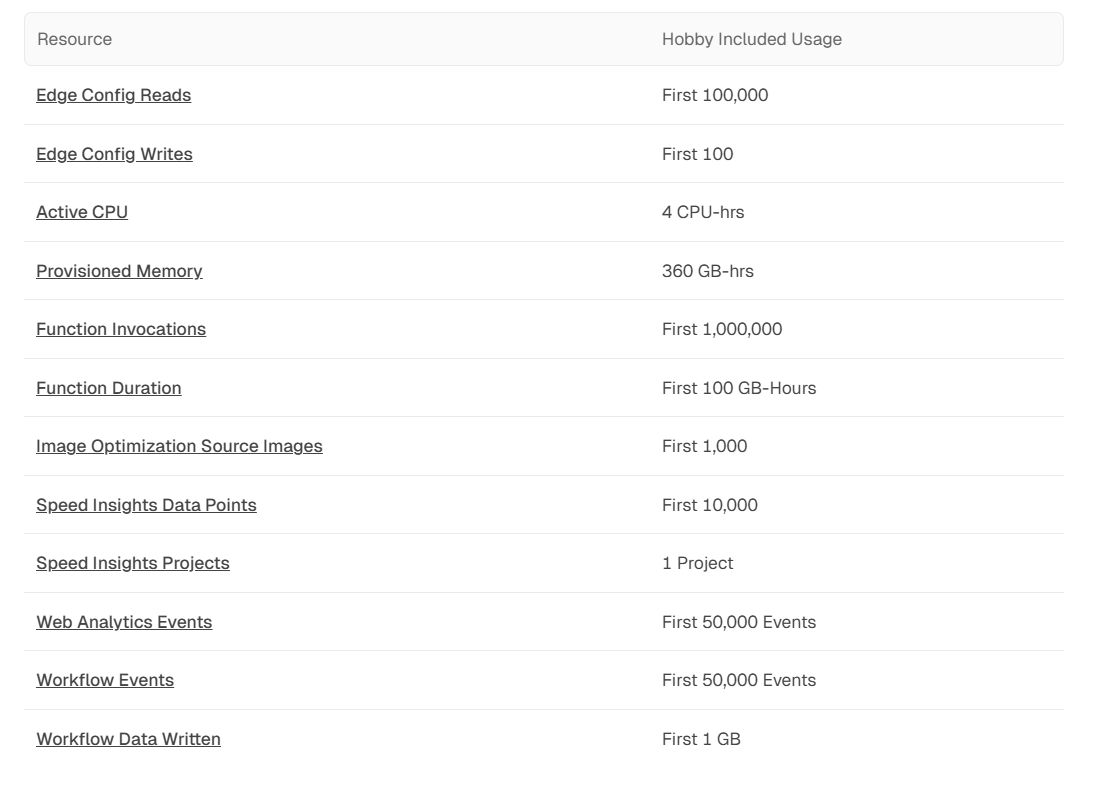
The free Hobby plan is genuinely useful and has no expiry date.
Vercel Free Hosting Features:
- Unlimited deployments and projects
- 100 GB bandwidth per month
- 1 million serverless function invocations/month
- 1 million edge requests/month
- 4 hours active CPU/month
- 1 GB Blob Storage
- Continuous deployment from GitHub, GitLab, and Bitbucket
- Pull request preview deployments
- Free SSL and custom domain support
- Global edge network
- DDoS mitigation and WAF included
- No credit card required
Best for: Next.js applications, React-based frontends, and JAMstack projects where you want the best possible framework integration. Also excellent for developers who want the fastest deploy workflow for personal and open-source projects.
Critical limitation: The Hobby plan is restricted to non-commercial use. If your project generates revenue even indirectly, Vercel’s Terms of Service require you to upgrade to the Pro plan ($20/month per member). Also, like Netlify, hitting the bandwidth cap pauses your deployment with no grace period.
4. GitHub Pages Free Hosting
GitHub Pages is the simplest free hosting option on this list. If your code already lives on GitHub, you can publish a live website by toggling a single setting in your repository, no separate account, no billing setup, no configuration.
GitHub Pages serves static websites directly from a GitHub repository at yourusername.github.io or a custom domain. It natively supports Jekyll for blog-style sites, but you can also push plain HTML, CSS, and JavaScript or use any static site generator and commit the output.
GitHub Pages Free Hosting Features:
- Free website hosting with no bandwidth fees (100 GB/month soft limit)
- Custom domain support with free SSL
- Deploy from any branch or folder in a public repository
- Native Jekyll support with blog-ready themes
- Support for plain HTML, CSS, JavaScript, and other static assets
- Unlimited deployments for public repositories
- GitHub Pro ($4/month) adds GitHub Pages support for private repositories
Best for: Open-source project documentation, developer portfolios, personal blogs, and any project already hosted on GitHub that needs a simple public-facing site with zero extra setup.
Limitation to know: GitHub Pages is for truly static sites only, with no server-side logic. Repository size is capped at 1 GB. GitHub may throttle or disable sites that consistently exceed the 100 GB/month bandwidth soft limit.
5. Render Free Hosting
Render is the best free platform for full-stack developers. It’s also the most commonly recommended free alternative to Heroku after Heroku discontinued its free tier in 2022.
Unlike the static-only platforms above, Render’s free tier supports actual web services (Node.js, Python, Ruby, Go, and more) alongside static sites and a free PostgreSQL database. You can deploy a full-stack prototype with a web service, a database, and a static frontend without entering a credit card.
Render Free Hosting Features:
- Free static site hosting (unlimited)
- Free web services (Node.js, Python, Ruby, Go, Docker, and more)
- Free PostgreSQL database (expires after 30 days on the free tier)
- 512 MB RAM per web service
- Free SSL and custom domain support
- Automatic deploys from Git
- Pull request preview environments
- Zero-downtime deploys on paid tiers
- Private networking between services
Best for: Full-stack prototypes, backend APIs, and side projects that need a real server (not just static files) without paying for hosting. Render is the go-to replacement for Heroku’s free dynos.
Limitation to know: Free web services on Render spin down after 15 minutes of inactivity and take about 60 seconds to wake up on the first new request. For prototypes and demos, this is acceptable; for production apps with real users, you’ll want a paid plan (starts at $7/month per service to stay always-on).
6. AWS Free Hosting
Amazon Web Services offers free cloud hosting through several products that work together to host static websites and web applications. The most useful for static sites is Amazon S3 + CloudFront, and for full-stack apps, AWS Elastic Beanstalk.
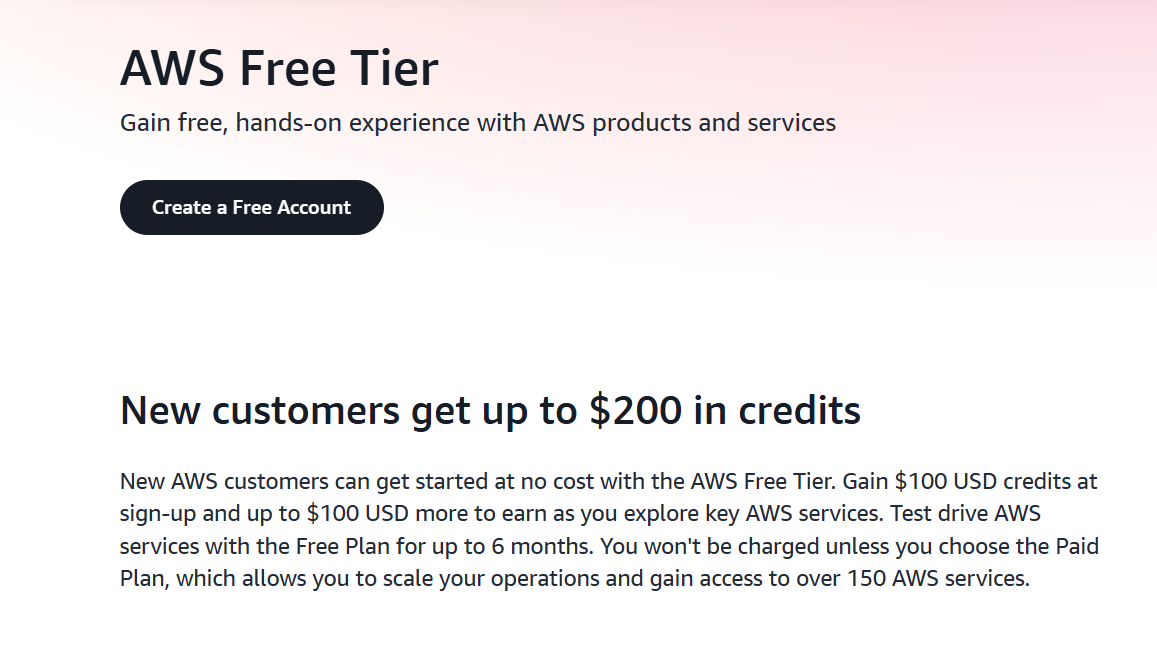
AWS’s free tier is divided into three categories:
- Always Free: services that never expire (e.g., AWS Lambda: 1 million requests/month free forever)
- 12 Months Free: free for the first 12 months after account creation (e.g., EC2 t2.micro, S3 5 GB storage)
- Trials: short-term free access to specific services
For static websites, S3 + CloudFront is a powerful combination. S3 stores your files; CloudFront delivers them globally. AWS Amplify Hosting (which replaced the old S3-only workflow) provides a more developer-friendly deploy experience with Git integration and preview URLs.
AWS Free Hosting Highlights:
- Amazon S3: 5 GB storage, 20,000 GET requests, 2,000 PUT requests/month (12 months free)
- AWS Lambda: 1 million requests/month free forever
- Amazon CloudFront: 1 TB data transfer/month (12 months free)
- AWS Amplify Hosting: free for 12 months (1,000 build minutes/month, 15 GB storage, 15 GB served/month)
- EC2 t2.micro instance: 750 hours/month free for 12 months
Best for: Developers already in the AWS ecosystem or those building apps that need to scale into AWS infrastructure. Also great for learning cloud architecture with real-world tools.
Limitation to know: AWS has a steeper learning curve than Netlify or Vercel. The free tier requires a credit card and has time limits on most services (12 months). After the free period, you pay for usage.
7. Google Firebase Free Hosting
Firebase Hosting is Google’s free web hosting platform, built as part of the broader Firebase ecosystem. It’s a strong choice if you’re building apps that also use Firebase services like Authentication, Firestore, Realtime Database, or Cloud Functions.
Firebase Hosting serves static content over a global CDN with free SSL. While the hosting itself is generous on the free Spark plan, Cloud Functions (which enable dynamic server-side logic) require the paid Blaze plan with a billing account attached.
Firebase Free Hosting Features (Spark Plan):
- 10 GB hosting storage
- 10 GB data transfer per month
- Free SSL certificate
- Custom domain support
- Deploy via Firebase CLI (
firebase deploy) - Hosting Channels for preview/staging environments (similar to deploy previews)
- Tight integration with Firestore, Auth, Cloud Storage, and other Firebase services
- 1 GB Realtime Database storage and 50,000 reads/day free
- 1 GiB Firestore storage with 50,000 reads/day free
Best for: Developers building apps that need tight integration with Firebase’s backend services, authentication, real-time data sync, and push notifications. The hosting is the weakest part compared to dedicated static hosts like Cloudflare Pages, but the ecosystem integration is unmatched.
Limitation to know: Cloud Functions (serverless backend logic) are not available on the free Spark plan. You need to upgrade to the Blaze plan (pay-as-you-go) to use them, though the first 2 million invocations/month remain free even on Blaze.
8. GitLab Pages Free Hosting
GitLab Pages is GitLab’s built-in free static site hosting, allowing you to publish websites directly from a repository on GitLab.com.
Like GitHub Pages, GitLab Pages is designed for developers whose code already lives on the platform. It supports any static site generator like Gatsby, Jekyll, Hugo, Hexo, Middleman, Hexo, or plain HTML/CSS/JavaScript and deploys automatically via GitLab CI/CD pipelines on every push.
GitLab Pages Free Hosting Features:
- Free hosting for public and private repositories
- Custom domain support with free SSL (Let’s Encrypt)
- Deploy via GitLab CI/CD pipelines
- Support for any static site generator or plain HTML/CSS/JS
- Automatic HTTPS for all GitLab Pages sites
- Use on GitLab.com or your own self-hosted GitLab instance
Best for: Developers already using GitLab for source control who want integrated hosting without a separate platform. Also useful for teams that self-host GitLab and want all tooling in one place.
Limitation to know: GitLab Pages does not support dynamic server-side processing. It’s a pure static host. Setup requires familiarity with GitLab CI/CD pipeline configuration (.gitlab-ci.yml), which has a slightly steeper learning curve than Netlify or Vercel’s one-click deploys.
9. Azure Static Web Apps Free Hosting
Azure Static Web Apps is Microsoft’s managed free hosting service for static frontends with serverless API support via Azure Functions.
The free tier is genuinely solid for hobby projects and personal use. It includes custom domain support, free SSL, GitHub and Azure DevOps CI/CD integration, global CDN distribution, and 1 million free Azure Functions executions per month.
Azure Static Web Apps Free Tier Features:
- Free static web hosting
- Free SSL certificate
- 2 custom domains on the free tier
- GitHub Actions and Azure DevOps CI/CD integration
- Global CDN distribution
- 1 million free Azure Functions executions/month
- 100 GB bandwidth/month (site is suspended if exceeded)
- Staging environments (preview deployments for pull requests)
- 1 GB storage
Best for: Developers already in the Microsoft/Azure ecosystem, enterprise developers, and anyone building React, Vue, Angular, or Svelte apps that need serverless APIs powered by Azure Functions.
Limitation to know: The free tier is intended for hobby and personal use and does not include an SLA. For production workloads, the Standard plan is recommended. Azure account creation requires a credit card, though charges won’t occur within free tier limits.
10. Surge Free Hosting
Surge is the simplest CLI-based free hosting platform for static websites. If you want to go from finished HTML/CSS/JS files to a live URL in under 60 seconds without logging into any dashboard, Surge is the fastest way to do it.
A single command surge in your project directory, publish your site instantly. No Git integration required, no configuration files, no account setup beyond a one-time email/password prompt.
Surge Free Hosting Features:
- Instant single-command publishing from the CLI
- Free
.surge.shsubdomain for every project - Custom domain support on the free plan
- Free SSL for surge.sh subdomains (custom domain SSL requires the paid plan at $30/year)
- Publish HTML, CSS, JavaScript, and other static files
- Simple and minimal — no build pipeline required
Best for: Hackathons, quick demos, prototypes, client mockups, and any situation where you want to share a static site live within seconds. Surge is the fastest path from file to URL.
Limitation to know: Surge only supports static files, no server-side logic, no dynamic content. The free plan doesn’t include HTTPS for custom domains; that requires the paid Surge Professional plan at $30/year. Surge lacks deploy previews, branch deploys, or a web UI dashboard.
Free Web Hosting Comparison Table (2026)
| Platform | Free Bandwidth | Custom Domain | SSL | Server-Side? | Best For |
|---|---|---|---|---|---|
| Cloudflare Pages | Unlimited ✅ | ✅ | ✅ | Via Workers | Static sites, high traffic |
| Netlify | 100 GB/mo | ✅ | ✅ | Serverless functions | JAMstack, forms, previews |
| Vercel | 100 GB/mo | ✅ | ✅ | Serverless functions | Next.js, React apps |
| GitHub Pages | 100 GB/mo | ✅ | ✅ | ❌ | Docs, portfolios |
| Render | Generous | ✅ | ✅ | ✅ (spins down) | Full-stack apps, Heroku replacement |
| AWS Free Tier | 1 TB/mo (12 mo) | ✅ | ✅ | ✅ (Lambda) | AWS ecosystem, scalable apps |
| Firebase Hosting | 10 GB/mo | ✅ | ✅ | Via Blaze plan | Firebase-integrated apps |
| GitLab Pages | Generous | ✅ | ✅ | ❌ | GitLab users |
| Azure Static Web Apps | 100 GB/mo | ✅ | ✅ | Via Functions | Azure/Microsoft ecosystem |
| Surge | Generous | ✅ | Subdomains only | ❌ | Quick demos, CLI deploys |
What Is the Best Free Web Hosting Site in 2026?
The best free hosting platform depends on what you’re building:
Best overall for static sites: Cloudflare Pages. Unlimited bandwidth, 300+ city CDN, and no surprise overages make it the most reliable free hosting option with no strings attached.
Best for Next.js and React apps: Vercel. Purpose-built by the Next.js team, with the best framework integration and a polished developer experience.
Best for JAMstack with built-in features: Netlify. The most feature-rich static host, with form handling, deploy previews, and a broad plugin ecosystem. Just watch the credit limits on new accounts.
Best for full-stack prototypes and Heroku replacements: Render. The only platform on this list that supports real server-side web services on a free tier, including backend APIs and free PostgreSQL databases.
Best for the absolute simplest deploy: Surge. One command, live site, done.
Best if you’re already on GitHub: GitHub Pages. Turn any public repository into a live site with a single toggle.
Frequently Asked Questions
Is Heroku still free in 2026? No. Heroku permanently discontinued its free tier on November 28, 2022. The cheapest option today is the Eco dyno at $5/month. For free hosting alternatives, Render is the closest replacement for backend apps, and Cloudflare Pages or Netlify for static sites.
Which free hosting has the most bandwidth? Cloudflare Pages is the only major free hosting platform with truly unlimited bandwidth. Netlify, Vercel, and GitHub Pages all cap free bandwidth at 100 GB per month. For most personal projects, this is more than enough, but Cloudflare has a clear advantage for higher-traffic sites.
Can I use a custom domain on free hosting? Yes. All ten platforms on this list support custom domains on their free tiers. Surge is the only one that doesn’t include free SSL for custom domains (only for .surge.sh subdomains); all others provide free Let’s Encrypt SSL for custom domains.
Can I host a dynamic (server-side) app for free? Yes, but with limitations. Render offers free web services for Node.js, Python, Go, Ruby, and Docker apps, though they spin down after inactivity. Netlify and Vercel support serverless functions. AWS Lambda and Firebase Cloud Functions (on the Blaze pay-as-you-go plan) also offer generous free tiers for server-side logic.
Do I need a credit card for free hosting? Most platforms don’t require one. Netlify, Vercel, Cloudflare Pages, GitHub Pages, GitLab Pages, and Surge all offer their free tiers with no credit card required. AWS and Azure require a credit card for account creation (though charges won’t occur within free limits). Render and Firebase do not require a card for basic free use.
Recommended Articles:
- 15 Best Web Design Tools For Creating Beautiful Websites
- 20 Best Landing Page Tools For Small Businesses
- 20 Free Dynamic Web Hosting Services Perfect For All Users
- 12 Best Free Hosting for Static Websites

Ronnie Banks is a Digital Marketing Specialist at IPB Digital LLC. Ronnie loves writing about exciting SaaS products and business startups. You can connect with IPB digital LLC on LinkedIn, Twitter and Facebook.