
What is lead scoring?
Your CRM is full. Your reps are busy. Yet revenue still feels flat. If that sounds familiar, you do not have a traffic problem. You have a lead scoring problem.
This guide explains what lead scoring is, why your current process is failing you, and how to introduce scoring in a way that fits an early-stage B2B SaaS team with limited time and budget.
Lots of leads, not enough focus
Early on, every new demo request feels exciting. You answer every inquiry, jump on every call, and write custom follow-ups for everyone.
Then traffic ticks up. You add outbound. You turn on paid. Your team ends up:
- Cycling through raw trial signups with no budgets
- Chasing big logos that will never switch
- Ignoring smaller accounts that would buy this month
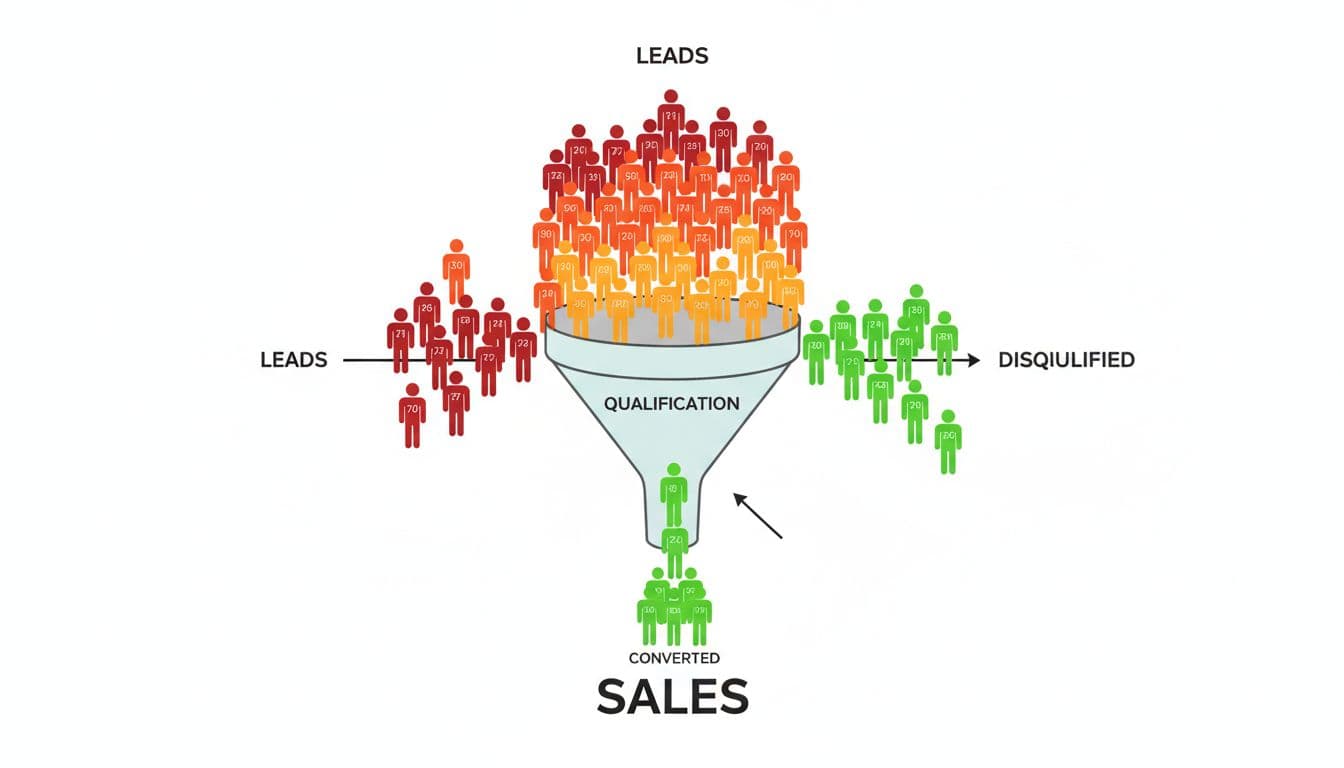
Lead scoring exists to answer one simple question: Who should we focus on first, right now?
What is broken in your current lead management
Most founder-led teams treat all leads almost the same. The only “priority” is who shouted loudest or came in most recently.
Common signs the system is broken:
- No shared definition of a qualified lead
- Sales and marketing are arguing over “lead quality.”
- Reps working off gut feeling and inbox order
As this SaaS-focused predictive lead scoring guide explains, this usually produces friction, not revenue, because no one trusts the numbers or the process.
Who actually feels the pain
Different people feel the chaos in different ways:
- Founders see a rising CAC but flat close rates
- Marketers hit MQL targets, but sales ignore half their leads
- Sales reps complain they spend time with tourists, not buyers
- RevOps generalists get dragged into “fix the CRM” projects
If you are chasing growth with a 1 to 20-person team, every hour wasted on the wrong lead hurts.
Why does it get worse as you scale
More pipeline sounds good until you try to work it.
As signups, trials, and hand-raisers grow:
- Response times slip, so hot interest gets cold
- New reps copy bad habits from early reps
- Nobody remembers why some deals were “high priority.”
Without lead scoring, volume multiplies the chaos. You do more work, with less confidence, for the same or worse results.
What is lead scoring?
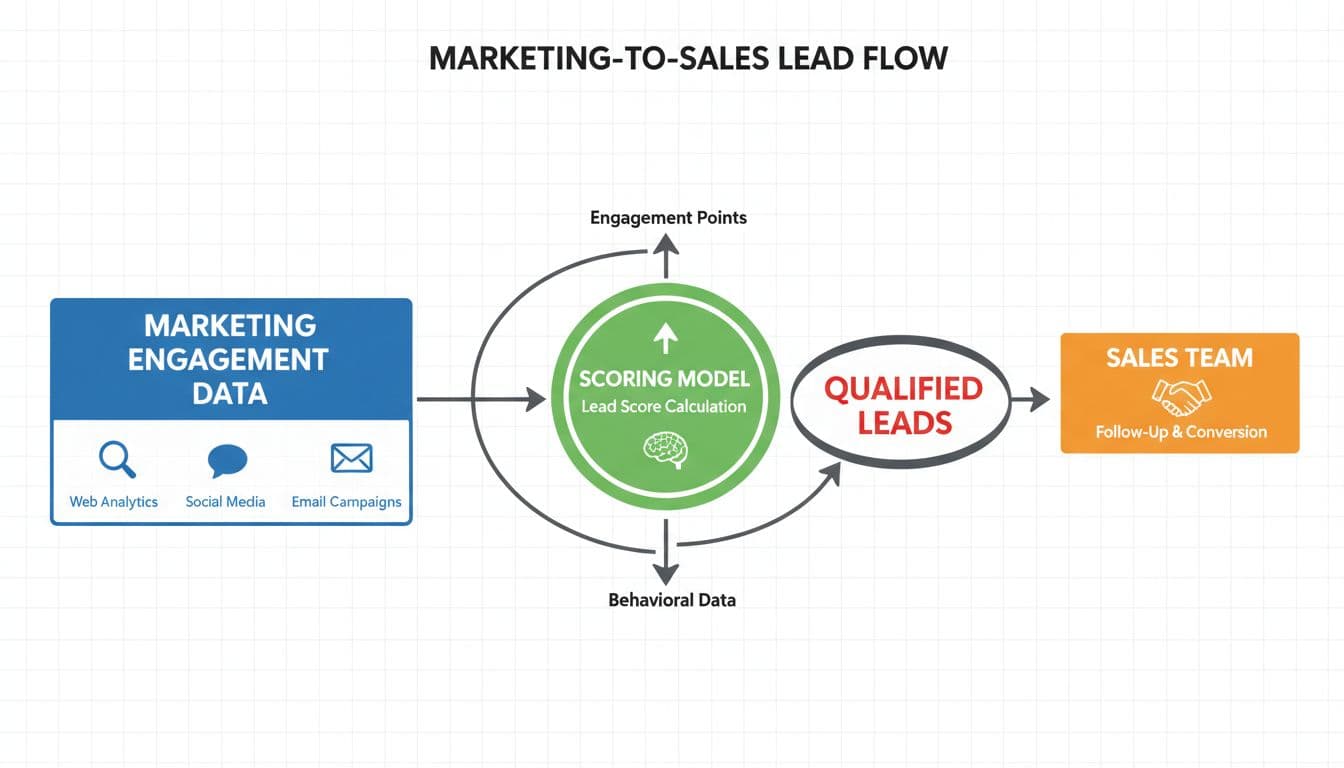
Lead scoring is a simple model that assigns a numeric score to each lead based on:
- Fit: How similar they are to your ideal customer
- Intent: How clearly they behave like a buyer, not a browser
For example:
- +30 points if the lead’s company size matches your ICP
- +20 if they visited the pricing page 3 times
- −15 if their email is freemail and their role is “student.”
You then set thresholds, like “only pass leads with 60+ points to sales”.
If you want a deeper perspective on fit and intent for SaaS, this B2B lead scoring overview gives helpful examples of both dimensions.
Why common approaches to lead scoring fail
Plenty of teams “have lead scoring” on paper but still hate it. Here is why.
Manual processes
Someone creates a loose rule like “AEs should focus on companies with 50+ employees, in X industries”.
The problem is, no one documents these rules in one place. New reps invent their own version. Marketing has a different mental checklist. The result is inconsistent, non-repeatable decisions.
Spreadsheets
The next step is often a scoring spreadsheet. Columns, weights, formulas. It looks smart for a week.
Then:
- Columns get added that no one uses
- Data stops syncing cleanly from your CRM
- Only the creator remembers how anything works
You get a static model in a fast-moving business.
Over-engineering the model
On the other side, some teams copy elaborate scoring models they saw in a SaaS lead scoring best practices article.
They include twenty signals, edge cases, and complex decay logic, even though they have:
- Limited historical data
- A small sales team
- No full-time RevOps
The model becomes too heavy to maintain, so it gets ignored.
Premature tools
Finally, there is the “platform first” mistake. A team buys an expensive revenue system promising “AI lead scoring” before they even agree on their ICP.
The software then needs:
- Events tracked that you do not have
- Clean CRM data, you are missing
- Time for setup that no one can spare
The tool gets blamed, but the real issue is skipping the process work.
What actually works for early-stage B2B SaaS lead scoring
Start with the process, not the software
Before touching tools, get alignment on three things:
1. ICP fit signals: Industry, company size, tech stack, roles
2. Intent signals: Pages viewed, actions in product, replies
3. Handoff rules: What must be true before sales picks up a lead
Write a one-page playbook. Keep it short enough that reps will actually read it.
Accept constraints and trade-offs
Your goal is not a “perfect” model. It is a useful filter.
You will have trade-offs:
- More strict scoring, fewer leads, higher close rates
- Looser scoring, more leads, more noise
Pick what matches your current capacity. Update the rules monthly, not yearly.
Stage-appropriate guidance
For an early-stage B2B SaaS:
- Pre-seed to Seed: Use a very simple manual score, 3 to 5 rules in your CRM
- Seed to Series A: Add product and engagement data, but keep the model under 10 signals
A clear, simple model that sales actually uses is better than a smart one that lives in a slide deck. If you need ideas by stage, this short piece on lead scoring for B2B SaaS campaigns shows a practical two-axis approach.

Lead scoring solution categories and tool types
Once your process is clear, then you can think about tools.
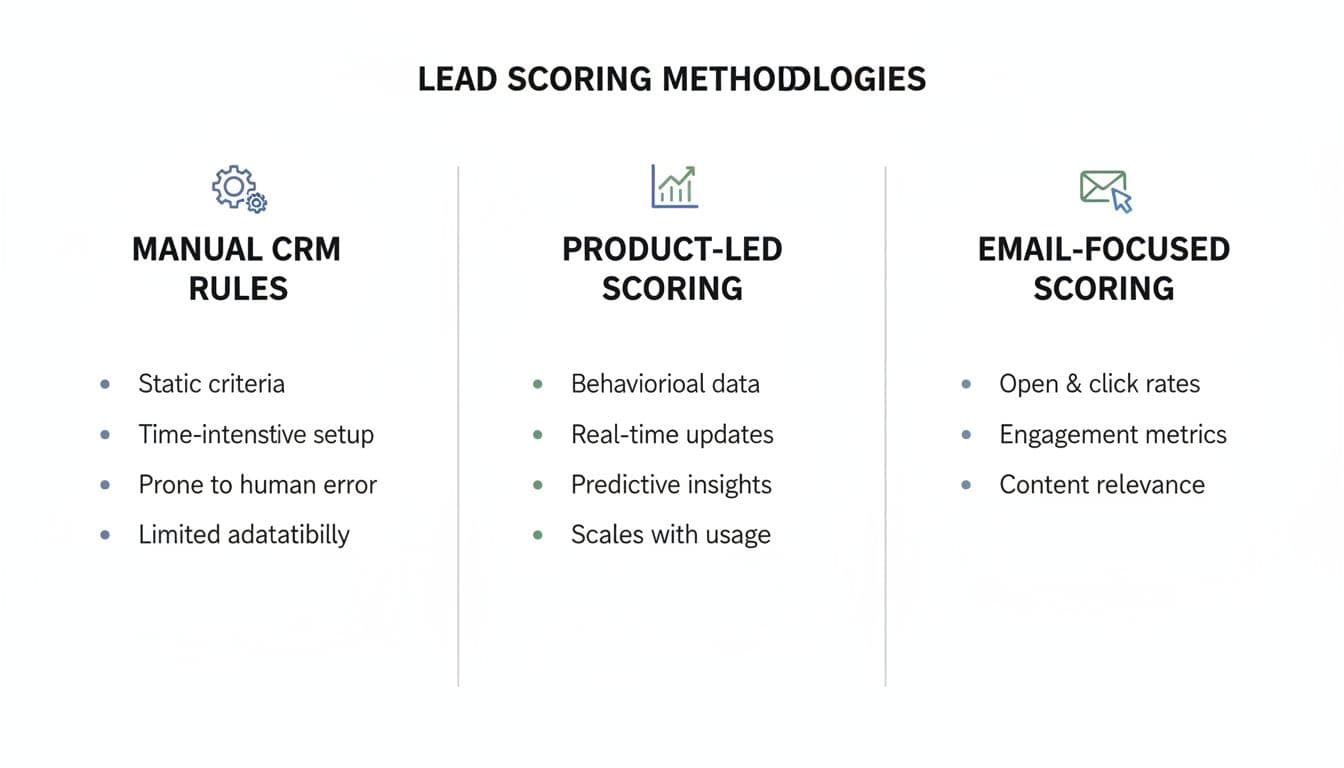
1. CRM-based lead scoring
Most CRMs let you create custom fields and simple rules. For many early teams, this is enough.
You can:
- Store a numeric score on the contact or account
- Use filters or views to show “hot leads.”
- Trigger tasks or sequences once a score passes a threshold
If your sales team lives in Gmail, you can even keep a simple score as a custom column using a tool like Streak, as covered in this Streak CRM for Gmail review.
2. Product and behavioral scoring tools
If you have many self-serve signups, you will want product usage in your scoring. Dedicated tools in this category track events and compute scores based on in-app behavior.
A good SaaS-focused scoring tool shows how to blend product actions with sales signals. These tools are powerful, but they are overkill if you do not yet track product events cleanly.
3. Marketing automation and engagement scoring
Email and marketing automation platforms often score leads based on:
- Email opens and clicks
- Form fills and page visits
- Campaign engagement over time
This is helpful when you run nurture programs or larger outbound lists. Just remember: email engagement alone does not equal buying intent.
Buying criteria, red flags, and right-sized recommendations
When you look at tools, use criteria like:
- Can we change the scoring rules without an engineer?
- Does it plug into our current CRM with minimal work?
- Can sales actually see and use the score in their daily view?
Red flags to avoid:
- “Black box” AI scores with no explanation
- Annual contracts that cost more than your AE’s salary
- Setups that require a dedicated ops head, you do not have
Right-sized recommendations:
- If you have fewer than 500 leads a month, start with CRM fields and a simple score model. No extra tool needed.
- If most leads are trials or freemium users, add a lightweight product usage scoring tool when you have clean tracking in place.
- If your entire team works from the inbox, a Gmail-based CRM like Streak can host manual scoring until you outgrow it. It is not ideal for advanced scoring, but it beats scattered notes.
When to act, when to wait, and what next
When to implement lead scoring
- You get more leads than your team can touch in 24 to 48 hours
- Sales and marketing disagree about which leads matter
- You see clear patterns in your best customers
When to wait
- You only get a handful of leads per week
- You do not yet know who your ICP is
- Your CRM data is so messy that any score would be random
Budget expectations
For most early-stage teams, the real “cost” is thinking and alignment time, not software. Start with:
- 0 to low software spend, using your existing CRM
- 3 to 5 hours with the founder, sales, and marketing to design the first model
Next steps and further reading
- Block time this week to define your first fit and intent signals.
- Implement a simple score in your CRM or inbox-based tool.
- If you are planning your broader support and CRM stack, review this guide to the top help desk and call center CRM tools to see how lead and customer data can connect long-term.
Conclusion: Make lead scoring work for your stage
Lead scoring is not about fancy math. It is about consistent focus on the right people at the right time.
For an early-stage B2B SaaS team, the winning approach is simple: agree on what a good lead looks like, translate that into a clear score, and put it where your team actually works.
Start small, keep it human, and let your lead scoring model grow as your product and pipeline grow with it.


SaaSXtra.com is a SaaS product review and software marketing blog for business startups. For questions and inquiries on the blog, please send an email to the Editor at saasxtra[at]gmail[dot]com.