
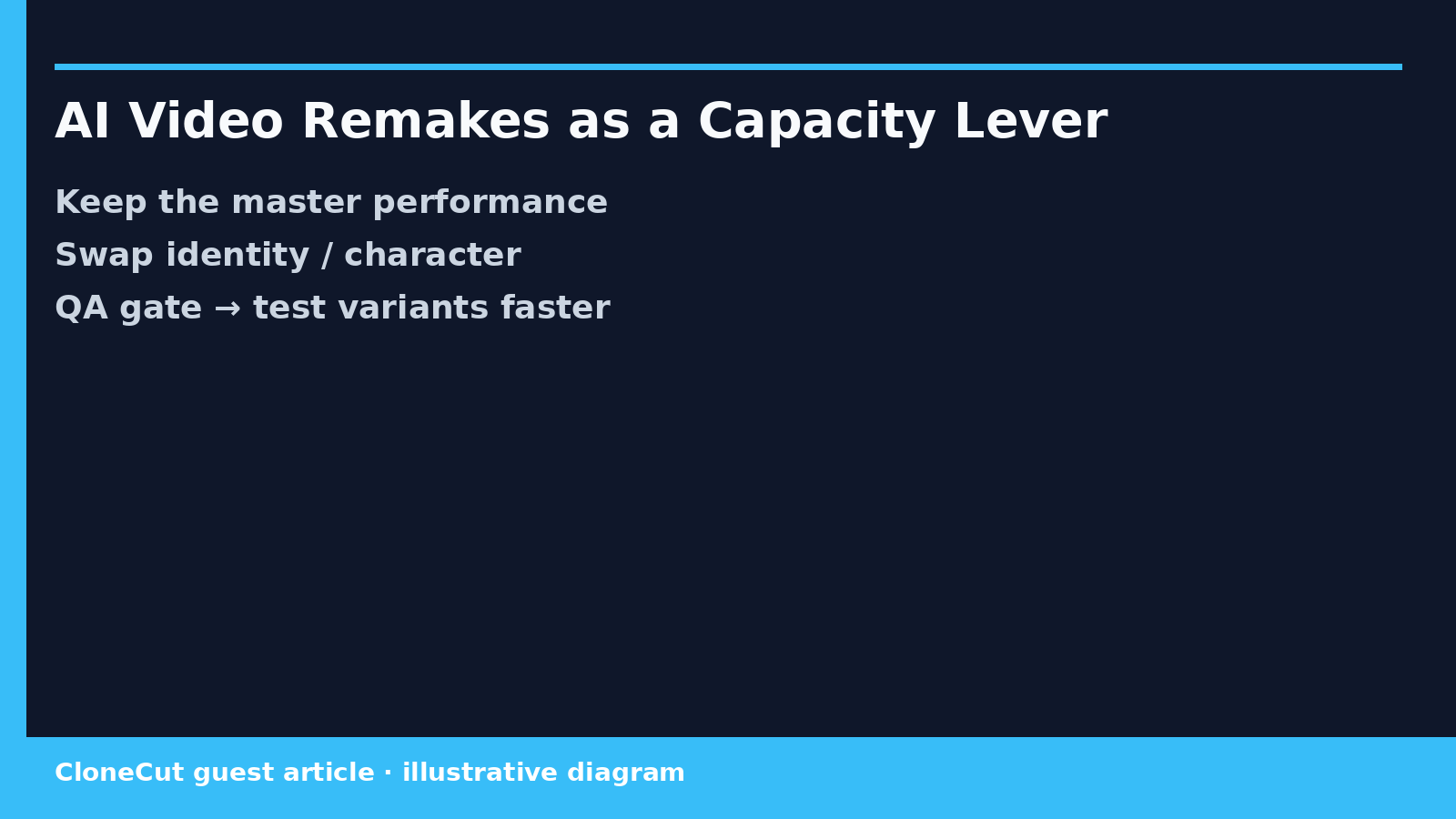
B2B product demo clips are expensive to keep current. A single motion that shows the UI, the value moment, and a credible presenter can take days to plan and hours to shoot. Then sales asks for an enterprise persona cut, marketing wants an APAC locale version, and product ships a UI change that makes half the library feel stale.
AI remakes: regenerating a clip so a different presenter or character appears while the demo motion stays intact; promise a way to multiply variants without rebuilding the set. For SaaS GTM teams, that promise only holds when the master plates are remake-ready, the change request is narrow, and quality control is treated like a release gate, not a taste debate.
Remaking B2B Demo Clips With AI
This framework is for content ops, product marketing, and demand-gen leads who already own a demo library. It is not a pitch for novelty. It is a decision system for when to remake, when to reshoot, and how to QC so finance and brand both stay comfortable.
The goal is more tested demo creative per week with clear rights, clear quality gates, and a scoreboard leadership will fund again.
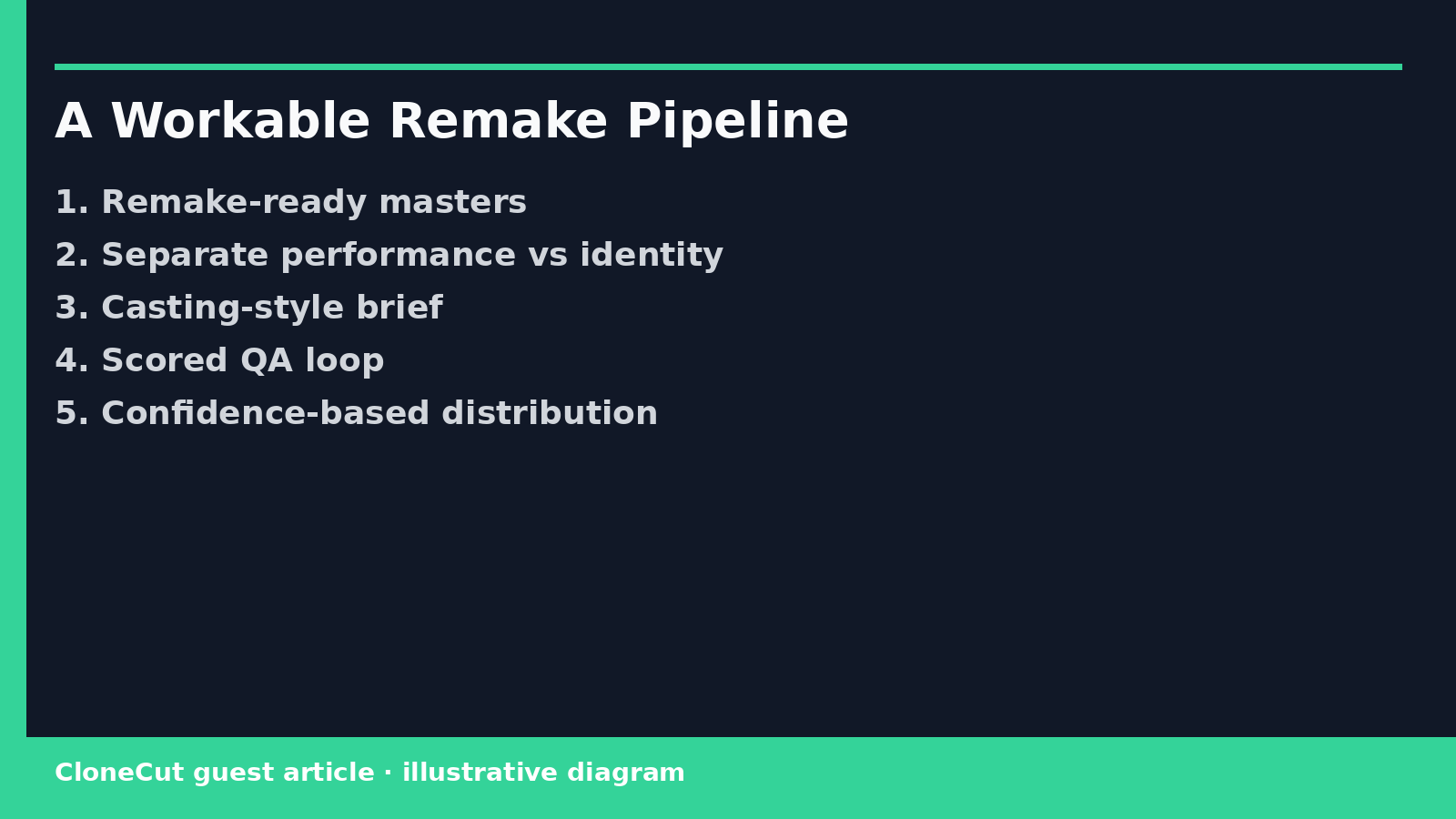
1. Remake-ready demo plates
Start with the plate, not the model. A remake inherits everything hard about the original: camera moves, hand-to-UI contact, glare on monitors, and any moment where the presenter’s face is half-occluded by a laptop lid. If the plate fights the model, no prompt will save the week.
Prefer mid-shots with a stable or lightly locked camera, clear face lighting, and UI that is large enough to read without micro-gestures. Scripted walkthroughs with predictable beats remake better than freeform founder riffs. Avoid plates where the value of the clip is unrehearsed chemistry or a one-off live reaction. Those are reshoot territory.
Build a short remake-ready checklist and apply it before anyone spends generation credits: face fully visible for most of the clip; limited rapid pan or zoom; hands not constantly covering product UI; audio bed clean enough that lip timing can be judged; rights language that already contemplates derivative or synthetic variants. Plates that fail two or more checks should stay in the live-shoot queue.
Also separate “performance plate” from “identity plate.” The performance plate carries script, pacing, and product truth. Identity is casting layered on top. Masters that constantly name a specific persona in on-camera dialogue lock identity into the copy and force either a rewrite or a brittle remake. Prefer masters that leave casting room without rewriting every line.
Archive remake-ready masters in a labeled bin with duration, ICP tags, and a one-line note on known hard moments (fast cursor work, reflective glass, side profile). Future tickets should start from that bin, not from a random Drive folder of every webinar ever recorded.
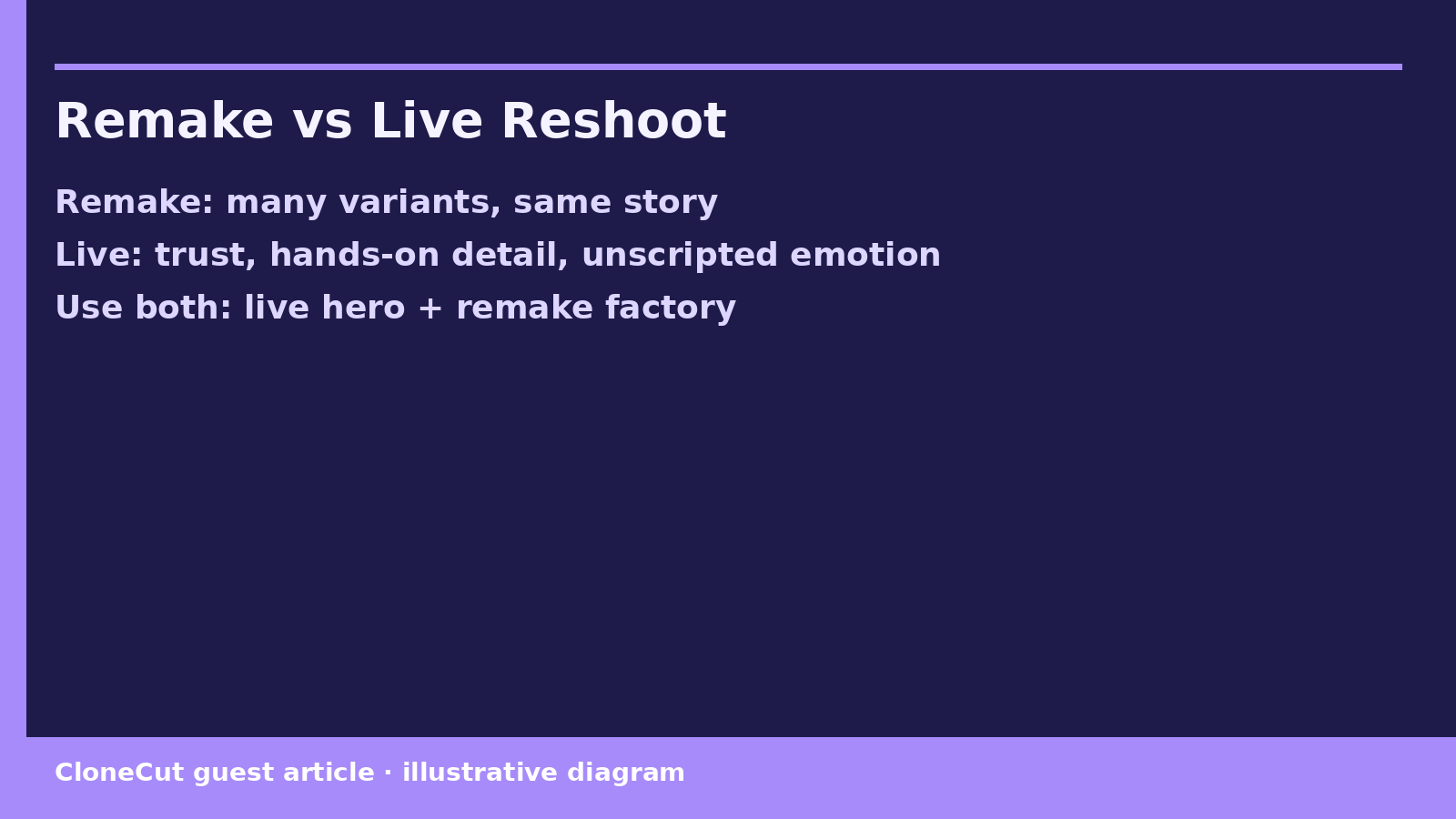
2. The one-change rule
Most failed remake projects try to change too much at once: new face, new wardrobe vibe, new locale backdrop cues, and a UI refresh in the same pass. Each variable multiplies defect surface. The one-change rule keeps the system debuggable: change one primary variable per generation batch, freeze the rest, and only combine winners after they clear QC alone.
In practice, that means three common batch types. Persona batch: same demo motion and locale cues, different presenter energy or demographic casting for ICP variants. Locale batch: same presenter identity cues where rights allow, adjusted wardrobe or soft environmental cues for region; not a full scene invent. SKU or offer batch: same talent and framing, updated lower-thirds, end cards, or tightly scoped UI inserts rather than a whole new performance.
If product has shipped a material UI change, do not ask a remake model to invent the new interface inside a face-swap pass. Either update the UI layer with a proper screen composite pipeline, or schedule a short live pickup. Treating UI truth as a casting problem is how teams ship demos that sales cannot stand behind.
Write the change brief like a casting brief. Specify what must stay identical (product claims, click path, logo lockups you own) and what may vary (presenter look, soft background tone). Add a do-not-invent list: no third-party logos, no celebrity lookalikes, no medical or regulated implications from appearance. Reviewers should grade against the same brief the generator used.
When stakeholders insist on “just make it feel more enterprise,” translate that into one measurable change: wardrobe formality, slower pacing cut, or a different presenter casting range; then run a controlled batch. Vague vibe requests are how queues stall.
3. GTM use cases and anti-patterns
Remakes earn their keep in GTM when the story is already proven, and identity or light localization is the variable.
Strong fits include: paid social and paid search creative tests that need many presenter variants of the same demo beat; lifecycle and nurture sequences that rotate personas without new shoots; partner or segment pages that need “someone who looks like the buyer” without implying a fake customer case study; and seasonal refreshes of wardrobe or end-card offers on an otherwise stable master.
They also help when the bottleneck is scheduling talent across time zones, not rewriting the narrative. If AE enablement needs five vertical cuts of the same core motion, a remake pipeline can compress calendar time, as long as legal has cleared synthetic variants of that talent or you are using owned branded characters.
Anti-patterns are equally clear. Do not remake your homepage hero, board deck opener, or enterprise trust film first. Those surfaces demand maximum authenticity and usually deserve live capture.
Do not remake unscripted customer interviews or anything that could be mistaken for a real named customer endorsement. Do not use remakes to paper over a weak demo story; if the click path and value moment are unclear, fix the script before multiplying faces.
Regulated or high-scrutiny categories: fintech claims adjacency, health-adjacent products, hiring or biometric messaging; need a higher bar. When authenticity itself is the product, remakes are a distraction. When the product truth is stable, and casting is the bottleneck, remakes are an ops lever.
A useful litmus test in planning meetings: if sales would refuse to play the clip on a live Zoom because it might look synthetic under scrutiny, keep it off customer-facing trust surfaces until QC and disclosure standards match that risk.
4. QC and disclosure checklist
Treat remake QC like a release checklist with timestamps, not a hallway “looks fine.”
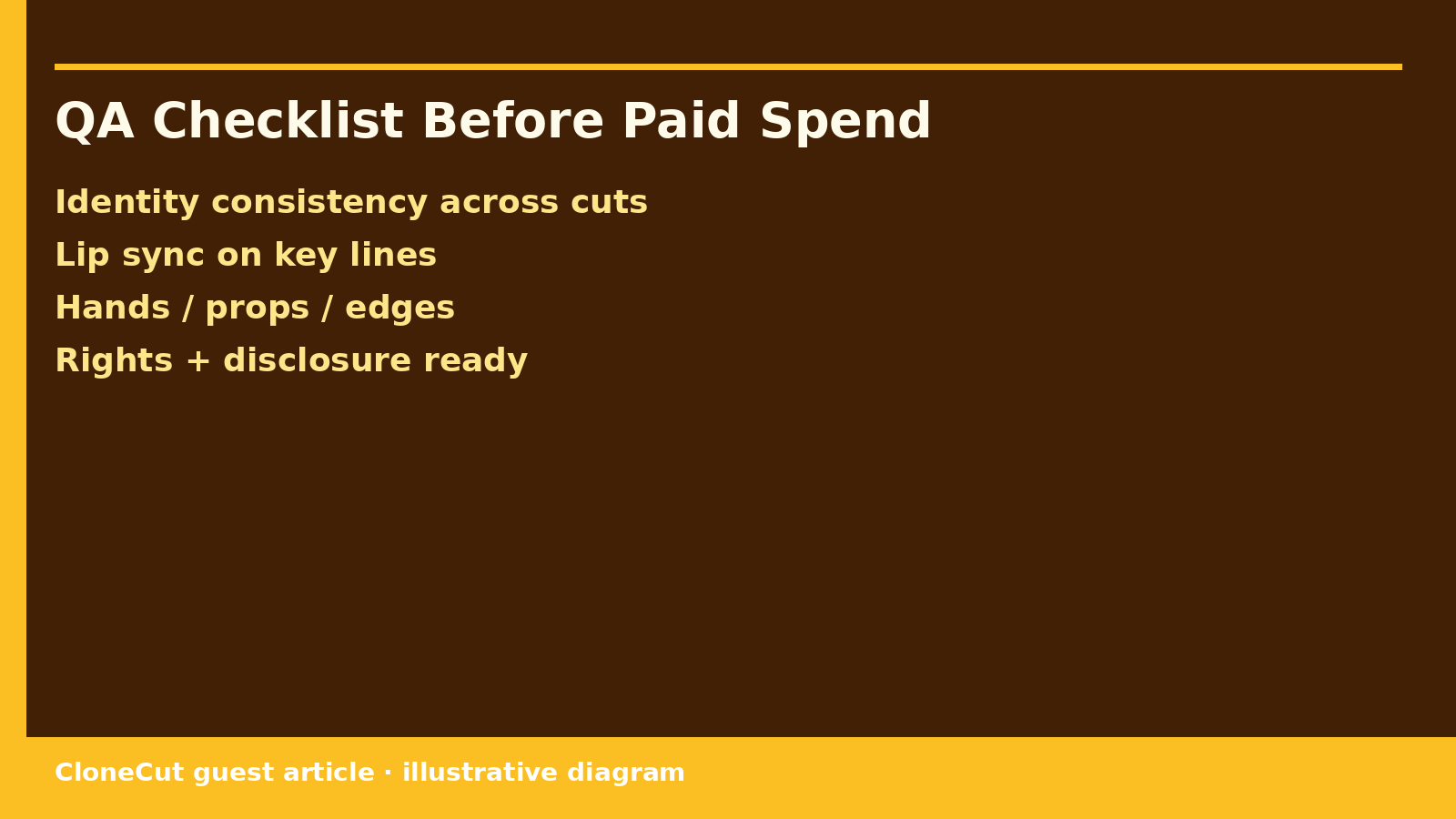
Score each candidate on: identity consistency across cuts; lip sync on key claim lines; hands, props, and cursor honesty; background artifacts or morphing edges; UI readability; and audio sync if you restitched dialogue. Fail closed on any defect that would make a skeptical AE pause the video in a live demo.
Run a two-pass review. Pass one is craft: a content producer marks defects with timecodes. Pass two is brand and rights: does the synthetic variant stay inside approved look ranges, and does the talent or character release cover this use? Random taste comments without a brief waste regenerations. Scored defects create a learning loop.
Disclosure and labeling belong in the same checklist. Know where platforms or local rules require synthetic-media labels. Decide whether the page, the video description, or the end card carries the note. Write the disclosure once, put it in the template, and make compliance boring. If you cannot document rights to synthesize a person’s likeness, stop; throughput is not worth a rights fight.
Keep an audit trail: brief used, model or tool version, seed or job IDs if available, reviewer names, and the final export hash or filename. Enterprise buyers increasingly ask how creative was produced. A lightweight trail turns a panic email into a calm answer.
Publish an internal one-pager that defines pass, revise, and reject. Without shared language, every stakeholder becomes an unofficial art director, and the SLA collapses.
5. Ops notes for B2B content teams
Stand up remakes as a small production system, not a side quest on someone’s laptop. Name an owner (often content ops or product marketing ops). Define intake: which tickets qualify as one-change remake requests versus live pickup. Cap work-in-progress so the queue does not become a junk drawer of half-finished faces.
Instrument a scoreboard finance will accept: variants shipped per week, time from brief to approved export, percent failing first QC, and paid or pipeline tests that used remake creative versus live-only creative. The economic case is faster learning loops on channels that punish slow creative cycles, not cheaper pixels for their own sake.
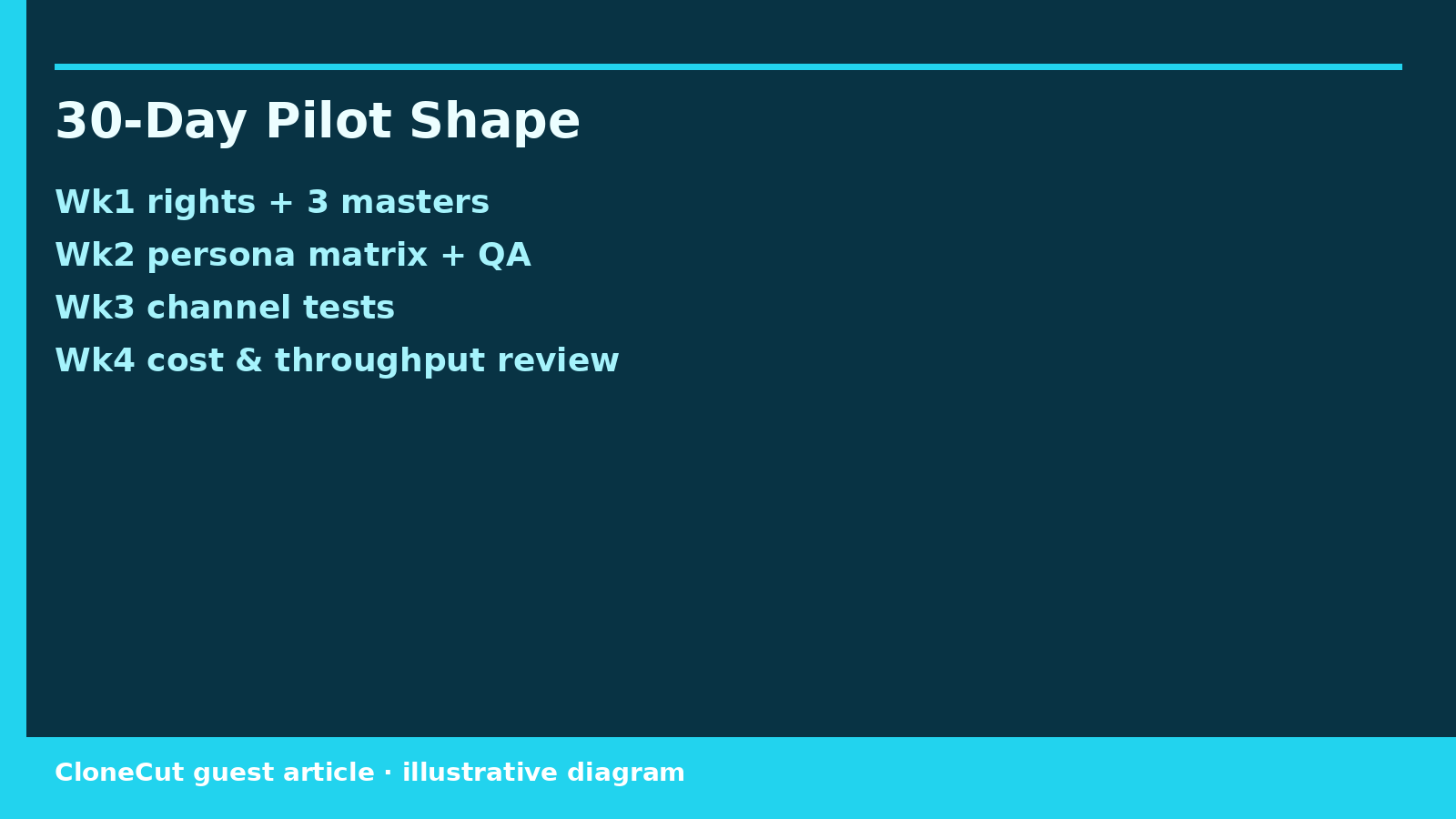
Pilot for thirty days on low-risk surfaces only: paid tests, nurture, retargeting, internal enablement drafts. Promote a remake to website or sales-critical surfaces only after it clears the same brand bar you apply to live cuts. If the pilot cannot clear QC without constant heroics, fix plates and briefs before buying more generation capacity.
Vendor questions to ask before you scale: what rights you retain in outputs; whether the vendor trains on your footage; what likeness and disclosure controls exist in the workflow; how you export an audit trail. Weak answers are a reason to keep the pilot tiny even when early frames look good.
Pair the pilot with a monthly plate-refresh ritual. Product UI drifts; last quarter’s remake-ready masters quietly become unfit. Fifteen minutes of checklist triage on the bin prevents a month of bad generations.
Conclusion
Remakes will not replace your studio. Used with remake-ready plates, a one-change discipline, honest QC, and clear disclosure, they can keep a B2B demo library current for persona, locale, and offer variants without turning every request into a full reshoot. Used as a shortcut around weak stories or fuzzy rights, they create risk faster than they create creativity.

Rose CEN works on CloneCut, an AI video remake and character-swap tool for creators and marketers (https://clonecut.app/).